Welcome to 3GDeep at Monash University
Clean energy, critical minerals and secure geological storage depend on understanding how rocks, fluids and engineered materials behave beneath the Earth’s surface. At 3GDeep, we combine experiments under controlled subsurface conditions with modelling to help partners assess performance, identify failure mechanisms and develop practical technologies.
At 3GDeep established in 2012, we have developed the Deep-Earth Systems for Sustainable Development (DESSD) framework to connect subsurface processes, engineered technologies and environmental outcomes. For partners, it provides a way to consider recovery, storage, materials and long-term integrity together when assessing a proposed technology.

Professor Ranjith Pathegama Gamage, FTSE, FREng, FCAE
Founding Director, 3GDeep
Research priorities and intended benefits
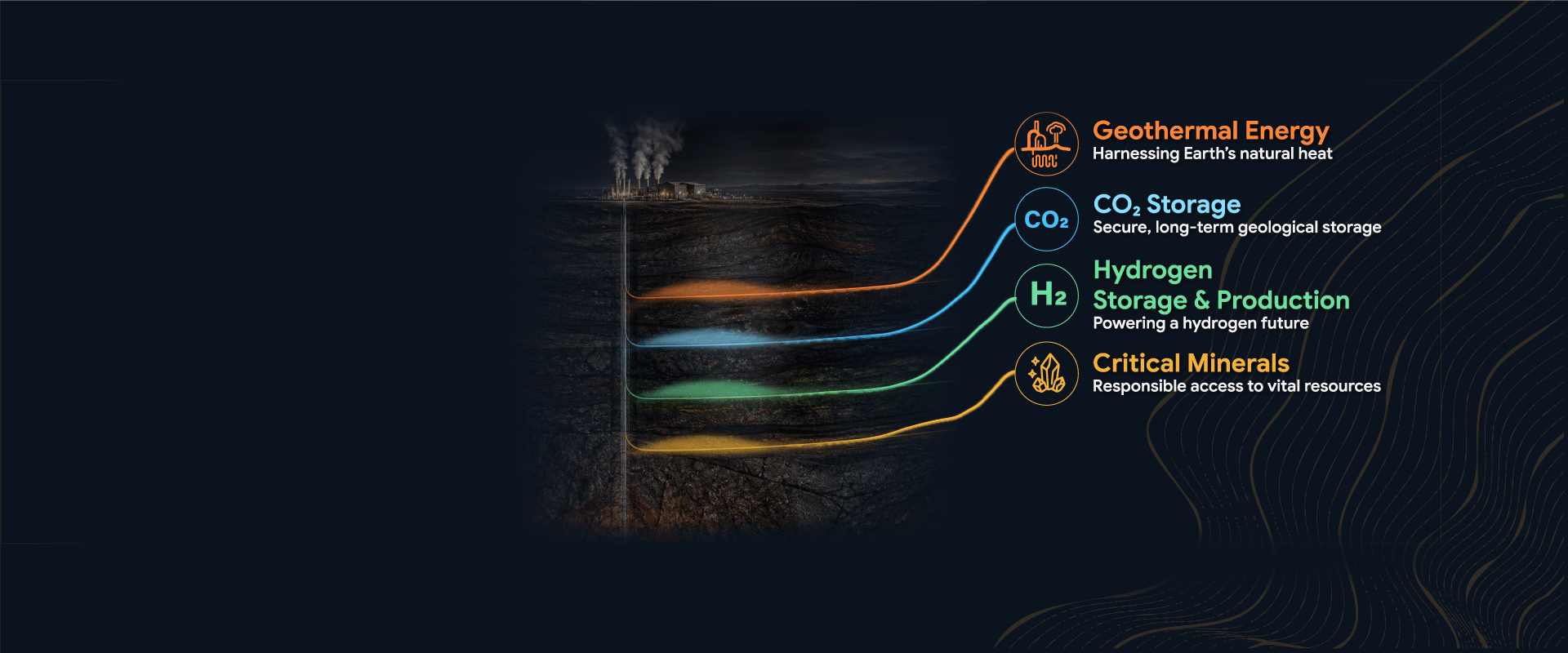
Deep Geothermal Energy
Accessing deep geothermal heat requires effective flow through hot rock. We investigate stimulation and circulation methods to improve heat recovery and reduce water demand, with performance assessed under relevant subsurface conditions.
Carbon Management
Secure carbon storage requires reliable containment and an understanding of fluid–rock reactions. We investigate geological CO₂ storage, mineralisation and productive uses of captured CO₂ to assess storage performance and environmental trade-offs.
Sustainable Mineral Recovery
Conventional mineral extraction requires substantial rock handling and processing. Our controlled rock-breaking and in-situ recovery research investigates how to improve access to minerals while reducing energy use, water demand and surface disturbance.
Hydrogen Production and Underground Storage
Hydrogen production and storage present different materials and engineering challenges. We investigate production using waste-derived materials and evaluate the transport, reactions and well integrity governing underground storage.
Circular Materials and Well Decommissioning
Waste-derived binders offer opportunities to reduce reliance on conventional cement. Through Eco-Green Cement and related research, we investigate strength, transport and durability for infrastructure and subsurface barriers, including well abandonment.
Our laboratory connects pore-scale investigation with larger-scale engineering experiments. Advanced characterisation and coupled modelling help us explain observed behaviour, test predictions and identify the validation needed before field deployment.
We work with universities, industry and government to connect scientific questions with practical requirements and train future research leaders. International collaboration including with China, India, Germany and USA and knowledge exchange are central to our contribution to clean energy, responsible resource use, innovation and climate action.
I invite researchers, students, industry, government and commercialisation partners to explore the evidence and opportunities. Together, we can develop solutions that respond to real energy and resource needs while protecting subsurface integrity.
Professor Ranjith Pathegama Gamage, FTSE, FREng, FCAE
Vice-Chancellor’s Distinguished Professor
Professor of Sustainable Development of Energy and Resources
Founding Director, 3GDeep
Monash University