
Research Projects
STUDY OF COUPLED THERMO-HYDRO-MECHANICAL (THM) BEHAVIOUR OF ROCK RELATED TO GEOTHERMAL INDUSTRY
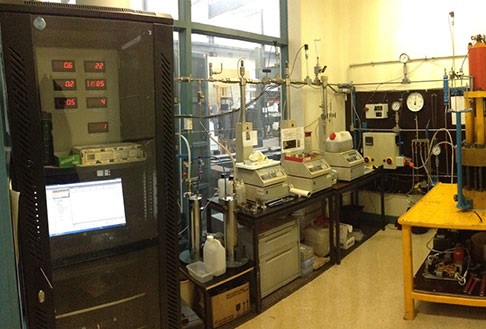
Australian contains one of the hottest granite on earth at reasonable drilling depth and Hot Dry Rock (HDR) geothermal energy is considered as a practical prospect in the future. This project aims to study the mechanical behaviours geothermal reservoir rock at the deeply buried earth. Temperature, pressure and fluid flow forms a complex mechanism that can be extremely differs from the surface rocks. A large amount of experimental works have carried out and the results will contribute information for the development of guidelines for engineering design at depth, including the rock physical property (mineralogy, grain size and porosity) dependence, temperature dependence and pressure dependence. Besides, a new multiphase high pressure and temperature controlled triaxial testing apparatus for geomaterials is designed and constructed in purpose of simulating the actual underground condition. This apparatus allows confining pressure up to 130 MPa, temperature up to 400 °C and fluid injection of 160 MPa, with axial loading capacity of 10 tonnes.
CO2 SEQUESTRATION IN DEEP SALINE AQUIFER: A STUDY OF FACTORS AFFECTING THE HYDRO-MECHANICAL PROPERTIES OF SALINE AQUIFERS IN CO2 SEQUESTRATION

Carbon dioxide (CO2) is one of the main greenhouse gases released to the atmosphere mainly from the burning of fossil fuels, such as coal, oil and natural gas, which currently supply around 85% of the world’s energy needs. Moreover, due to the low relative cost and abundance of fossil fuels, it is likely that fossil fuels will govern the economy for at least the next 25 to 50. Therefore, it is necessary to have proper CO2 emission control techniques to create a safer atmosphere for human beings. Geosequestration of carbon dioxide (CO2) in deep saline aquifers is one of the most feasible approaches to mitigate global warming. However, dissolution of injected CO2 in brine has some effects on chemical diffusion, failure strength and permeability in the reservoir rock. There is also a significant variation in the mineral composition of reservoir rock upon exposure to CO2, which changes the mineralogical and micrological structure of the rock mass and consequently changes the hydro-mechanical properties of the rock. Therefore, this research provides a comprehensive study of the potential changes in aquifer mechanical properties and permeability characteristics caused by injected CO2 under in situ conditions, highlighting the factors affecting the integrity of sedimentary rock properties.
In this research work, basically the following methods will be used;
- Laboratory experiments high temperature and high pressure tri-axial set up.
- Acoustic Emission (AE) to study crack propagation strength thresholds.
- Numerical modelling (COMSOL) to study the flow and strength behaviour of reservoir rock under different pressure and temperature conditions. These modelling results will be compared with laboratory experiments.
- Empirical modelling to improve the existing formula for reservoir rock failure strength, to suit deep underground conditions (pressure, temperature and fluid medium)
CORE FLOODING EXPERIMENTS ON CO2 GEOLOGICAL STORAGE

In recent years, the extreme weather caused by global warming has induced a number of meteorological and environmental disasters. Geological storage of CO2 is widely accepted as an effective method for reducing greenhouse gas emissions. Suitable geological formations for CO2 capture and storage include saline aquifers, coal seams, and depleted oil/gas reservoirs. Saline aquifers are common worldwide and have great potential for CO2 storage. CO2 injection and storage in deep saline aquifers involves many types of phenomena, and the main trapping mechanisms in deep saline aquifers are stratigraphic and structural traps, residual gas traps, dissolution, mineral precipitation, and/or adsorption. CO2 injected into an aquifer will displace the brine but because of capillary forces, the groundwater will not be completely displaced by the injected CO2. This remnant water has an important influence on the potential capacity and security of geological storage reservoirs. Residual water saturation will not only have a strong influence on the residual gas traps but also diminish the trapping capacity of structural and stratigraphic traps. Therefore, it is essential to carefully investigate the properties of residual water to improve our understanding of the conditions relevant to those seen in deep saline acquires. We conduct core flooding experiments to define the kind of saline aquifers most suitable for the geological storage of CO2.
RESEARCH ON THE MECHANISM OF WATER INRUSH AND NUMERICAL SIMULATION
The karst conduits and faults encountered in underground engineering maybe filled with various materials, such as clays, sands and gravels. The fluid flow and the mechanism of water inrush from these structures are ambiguous and complexity.
Water can diffusion in the clays with low permeability and flow in the sands with high permeability, whereas water fluid in the gravels maybe become turbulence flow. Different fluid laws, such as Darcy Law and Brinkman Equation, need be applied to describe the water fluid in these filling materials. In addition, the mechanisms of water inrush are also different. When the faults and karst conduits are filled with clays, the whole filling structure may be slipped under the high water pressure. When the faults and karst conduits are filled with sands, the filling structure would become instability whose modes may be similar to piping, contact scour and soil flow.
This project would develop a theory on the mechanism of water inrush from faults or karst conduits, as well as modify existing code and incorporated to the software. Especially, develop a software based on the MATLAB platform and the Lattice Boltzmann Method (LBM) to analyze the mechanism and process of water inrush. Compare the results derived by the developed software and others business software, such as COMSOL, UDEC and PFC, to verify the feasibility and accuracy of the developed software.
STIMULATION OF HEAT EXTRACTION FROM THE HOT DRY ROCKS- GEOTHERMAL ENERGY
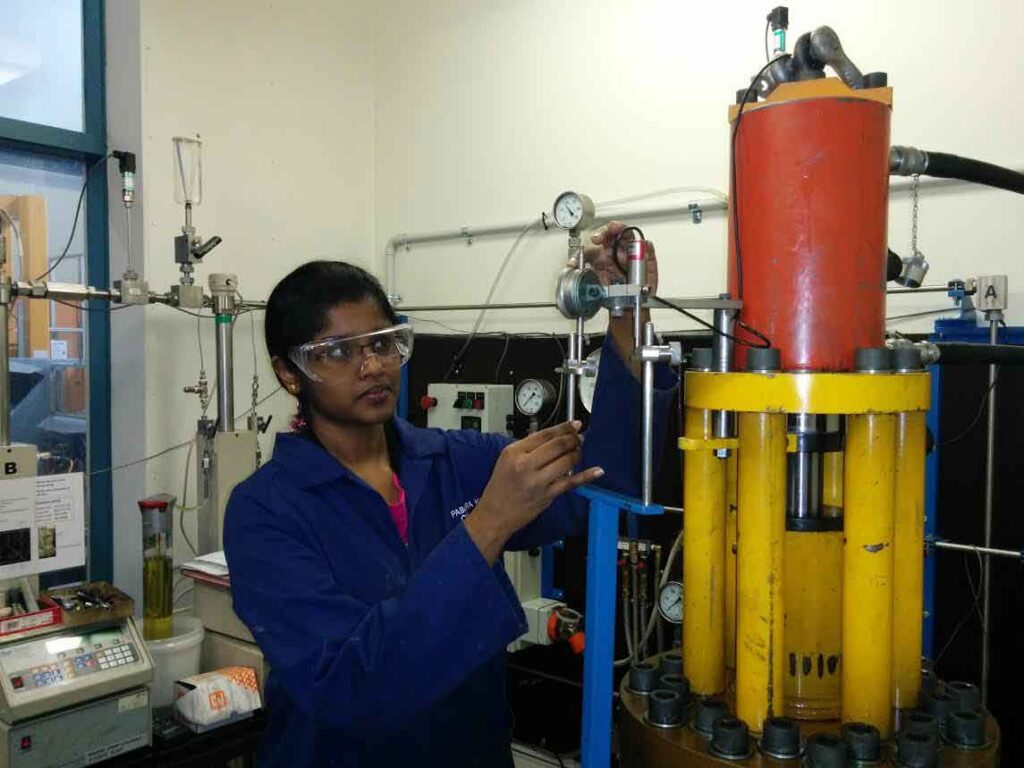
There is an enormous potential for power generation with geothermal energy however, at present commercial geothermal energy production is limited conventional geothermal resources. Enhanced or engineered geothermal systems (EGS) are considered unconventional geothermal resources which adapt engineering techniques to enhance the factors affecting geothermal energy production. Considering EGS systems, hot dry rock (HDR) systems are identified as potential geothermal resources which are primarily consist of granite with high temperature but very low permeability and little amount of stored fluid. Therefore stimulation techniques such as hydraulic fracturing, acid fracturing are adapted in order to enhance the permeability of the rock. Higher flow rate and thermodynamic efficiency of the circulation fluid determines the economics of the EGS. It is important to create interconnected fracture network with high transitivity for higher flow rate and sufficient residence time with contacting hot dry rocks. However, it is a real challenge to maintain both conditions together. Large volume of interconnected fracture network with small aperture and circulation fluid with favourable heat transmission characteristics is important to achieve this requirement. Considering the previous attempts of EGS development in the world, water has used as the fracturing and heat transmission fluid however, there are number of problems associated with water such as scarcity of water, contamination problems and higher solvent capacity of rock minerals at elevated temperatures which result reduction of fracture permeability with time. Therefore, non-water based fracturing fluids for reservoir stimulation has attracted geothermal community and supercritical CO2 has identified with favourable thermodynamic properties. Further, numerical simulations have confirmed that advantages of CO2 over water in terms of higher energy extraction rates. However, performs CO2 as fracturing fluid, geochemical issues as a result of aqueous solutions of CO2, structural changes associated with rock fluid interactions under geothermal conditions are poorly understood.
Therefore, this project aims to understand the coupled effects of hydro-thermo-mechanical and chemical behaviour of granite at geothermal conditions with hydraulic stimulation with water and super critical CO2 as a working fluid and further, to understand optimum conditions to enhance permeability with hydraulic stimulation with water and scCO2. This study is consist of a series of experimental works to address these issues; which utilize the newly developed advanced high pressure and high temperature tri-axial set up available in the 3GDeep Laboratory. Tri-axial experiments will be conducted for different granite rock, at various temperatures (20 to 300◦C), confining pressures (up to 150 MPa) and water and scCO2 injection pressures (up to 150 MPa) by simulating different geothermal conditions and rocks at different depths. In addition, to understand the chemical interactions between granite scCO2 and water at geothermal conditions, detail chemical and mineralogical study will be conducted with SEM, XRD, XRF and ICP-MS/ AES analysis. Also, the CT scanner and SEM analysis will be used to study the pore structure variation due to water and CO2 injection into the sample under various test conditions.
This knowledge is then used to develop theoretical and empirical equations for strength criteria and flow behaviour of fractured rock incorporating temperature and pressure influence. Firstly, a lab scale model will be developed to study the mechanical and flow behaviour of granite under tri-axial tests conditions and it will be extended to a more comprehensive coupled thermo-hydro-mechanical model which simulate the field condition. Findings of this study will contribute to unconventional EGS technology and Australian economy which seek novel approach for commercial EGS energy production.
PROPPANT DEGRADATION MECHANISMS ON HYDRAULIC FRACTURING IN SHALE RESERVOIR
Shale reservoir has been proved to have large storage of energy resource. By the commonly-used hydraulic fracturing process, proppant is taking an essential role to keep the fracture open after pumping and its behaviour is strongly related to the hydraulic conductivity and production rate. However, several proppant impairment mechanisms, including proppant diagenesis, proppant embedment, proppant flowback and fine generation & migration, have strong detrimental effect on proppant behaviour, which directly causes the reduction fracture width and the subsequent influence on hydraulic conductivity and production rate.
This study focus on major proppant impairment mechanisms to figure out the influence of different potential factors (like fracturing fluids, temperature, cyclic stress) on proppant behaviour. It is expected to achieve higher initial and lower reduction for both fracturing width and hydraulic conductivity by optimising the proppant behaviour.
EVOLUTION OF FLUID FLOW SYSTEM IN THE CO2-ENHANCED GEOTHERMAL SYSTEM: EXPERIMENTAL STUDY ON THE MECHANICAL AND THERMODYNAMIC PROPERTIES OF GRANITE MINERALS AND MOLECULAR DYNAMICS SIMULATION
CO2-enhanced geothermal system would use the CO2 instead of water as heat transmission fluid, and it would achieve geologic sequestration of CO2 as an ancillary benefit. However, the microscale mechanical for the fluid-rock chemical and mechanical interactions are still ambiguous and unsolved.
Before the production of the geothermal well, artificially induced fractures is of significant importance for the permeability enhancement and reservoir stimulation. In the absence of thermal shock or high thermal gradients, thermal stresses are generated by two main mechanisms: (1) mismatch in thermal expansion coefficients between different minerals and (2) thermal expansion anisotropy within single minerals. Thermal expansion coefficient (both linear and volume) and its anisotropy can be gained through the quantitative phase analysis methods (Rietveld structure refinement using the software TOPAS) via powder XRD. After that, Particle flow code (PFC) will be adopted to investigate the fracture pattern of granite using the thermal expansion coefficient of each composite. This project would be beneficial at explaining the rock failure mechanisms under the impact of temperature (both high temperature and cryogenic temperature).
Molecular dynamics (MD) is a computer simulation method for studying the physical movements of atoms and molecules and it acts as a bridge between microscopic length and time scales and the macroscopic world of the laboratory. MD simulation can be adopted to study the mechanical and thermodynamics properties of granite minerals and the reservoir fluids. We have applied the LAMMPS to study the stress-strain curve of granite minerals and the corresponding Poisson’s ratio. Our next step is to construct the multi-phase crystalline mineral (granite or other reservoir rocks) and study the mechanical properties (basic mechanical parameters and fracture initiation and propagation). The interaction mechanism (diffusion, chemical reaction, interfacial tension, etc.) between fluids (water or supercritical carbon dioxide) and rocks will be spelled out after that. Experimental methods, for example, XRD, SEM, CT and nanoindentation will be adopted to validate our simulation results.
CO2 SEQUESTRATION: A STUDY OF LONG-TERM STABILITY OF CAPROCK SEALING UNDER DEEP SALINE CO2 SEQUESTRATION ENVIRONMENT
Carbon dioxide (CO2) is one of the main greenhouse gases released to the atmosphere mainly from the burning of fossil fuels, such as coal, oil and natural gas, which currently supply around 85% of the world’s energy needs. Moreover, due to the low relative cost and abundance of fossil fuels, it is likely that fossil fuels will govern the economy for at least the next 25 to 50. Therefore, it is necessary to have proper CO2 emission control techniques to create a safer atmosphere for human beings. Geosequestration of carbon dioxide (CO2) in deep saline aquifers is one of the most feasible approaches to mitigate global warming. But in actual field condition, one of the major concerns of underground CO2 sequestration is the CO2 leakage through the caprock due to numerous reasons.
The injection and buoyancy pressure of CO2 can activate both fractures and faults in the caprock. On the other hand, the rock matrix porosity and fracture apertures (primary and secondary fractures) can be affected by chemical reactions (dissolution and precipitation) between CO2 and caprock minerals. As a result, in the long-term scenario there are possibilities of leaking CO2 through caprock. Therefore, it is very crucial to find the changes of chemico-mineralogical and hydro-mechanical properties of the caprock in the presence of CO2 in the long-term scenario. Such understanding can reduce the risks related to leakage of CO2 by selecting suitable sites and controlling the injection pressure and injection intervals etc. Therefore, this research is aimed to obtain a comprehensive knowledge on chemico-mineralogical and hydro-mechanical properties of the caprock in long-term scenario under deep saline CO2 sequestration environment by conducting experimental studies, numerical and analytical simulations.
MICRO-LEVEL RESPOND OF COAL ASSOCIATED WITH CO2 SEQUESTRATION IN DEEP COAL SEAMS
Geosequestration of CO2 has been identified as a promising technique to mitigate global warming. Deep un-minable coal seams are recognised as potential reservoir for CO2 sequestration, where great amount of CO2 can be stored and large volume of CH4 can be extracted during the process. However, injection of CO2 in coal seams will lead to its physical and chemical structure to be significantly changed, resulting in a modification of coal mass hydro-mechanical properties. Ultimately, these alterations will affect the safety and efficiency of the sequestration project.
This project aims to characterize coal microstructural and mineralogical changes upon CO2 injection and investigate the resultant hydro-mechanical properties alteration under in-situ conditions. In-situ CT imaging will be conducted using X-ray triaxial cell to study the fracture network change of coal due to coal-CO2 interaction at reservoir conditions and lattice Boltzmann method will be applied on the micro-CT images to determine the flow behaviour variation. Chemical and mineralogical reactions will be studied by conducting SEM-EDS, XRD and ICP-MS analysis. Mechanical property change of coal will be determined by conducting UCS, P S wave and nano-indentation tests.
NUMERICAL AND EXPERIMENTAL STUDY OF SAND PRODUCTION IN OIL AND GAS RESERVOIRS
Sand production is a phenomenon that occurs during the development of oil or natural gas in the petroleum industry. Sand particles in unconsolidated and weakly consolidated formations move from the reservoir into the well along with the oil or natural gas flow, which is commonly known as “sand production”. It is estimated that 70% of the world’s total oil and gas reservoirs are prone to sand production. Sand production may cause many problems including bore well failure, damage to safety valves, lifting equipment, surface equipment and pipes. Accurate prediction of sand production and destabilization of perforation cavities will be very helpful in selecting the maximum drawdown without sand control, perforation cleaning schemes and optimum well-completion methods. Therefore, a series of consequences arisen by sand production during oil or natural gas exploitation could be easier to avoid.
Numerical prediction of sand production is economic and efficient, compared to laboratory experiments. However, numerical simulation may obtain inaccurate or unrealistic results. It is necessary and important to validate sand production numerical model by field data, laboratory experiments and theoretical modelling, in order to ensure a realistic and consistent approach to sand production numerical prediction, which is the main object of this study.
A SUSTAINABLE CEMENT FOR DEEP WELL APPLICATIONS
Today, waste generation is increasing at an alarming rate with the rapid development of the industrial sectors and the complex lifestyles of the growing population. Some of the significant consequences of long-term industrial and municipal waste storage are the lack of suitable storage space, groundwater contamination due to leaching, air pollution with dust blow, landslides, and the cost and energy requirements of haulage and collection. The possible inclusion of waste resources in cement binders is a viable solution to overcome the adverse effects of waste generation. However, the successful utilization of such types of waste is yet to be perfected.
In this project, one-part alkali-activated cements (AACs) have been developed utilizing considerable amounts of waste resources such as coal ash, blast furnace slag and municipal waste glass, thereby contributing to the elimination of adverse environmental impacts. Ultimately, recycling these wastes in AACs produces cost- and emission-effective binders with lower energy consumption than Portland cement, leading to sustainable construction practices.
ROCK DAMAGE EVOLUTION WITH HYDRO, THERMO AND MECHANICAL ALTERATION IN EGS
As fossil-fuels-dominated energy mix has conducted many environmental concerns such as extreme weather events, smog, and acid rain due to the exhaust emissions, a worldwide concern is aroused to strengthen the efforts in developing alternative green energies. Geothermal energy, as a renewable and sustainable alternative, has distinct advantages in aspects of large reserve, weather proof, base load, stability and safety. EGS (Enhanced Geothermal System), aiming at extracting heat resources from HDR (Hot Dry Rock), is convinced to have great potentials. For instances, it can feed China and US for several millenniums given only 2% of their EGS reserve at depth from 3~10km been efficiently utilized.
As a general concept of EGS, it first adopts permeability stimulation to enhance the permeability of HDR and then pumps fluid cycling from injection borehole(s) to production borehole(s) via the sub-ground fractured hot rock with deep thermal energy being carried out within the heated fluid. The engineering measures of EGS is primarily associated with the damage of reservoir rock being along with complex interactions among thermal, hydraulic and mechanical processes. A satisfactory EGS would initiate a fracture pattern that, on the one hand, ensures comparatively high formation permeability allowing adequate rate of cycling flow; On the other hand, the fracture pattern is excepted not to include direct main fractures connecting injection and production boreholes to avoid short-circuits. Currently, field trails have seldom stricken excellent balances between the two poles, retarding the commercialization of heat mining from HRD. However, the two dialectical poles can be unified assuming that a fracture pattern (crack network) is obtained that crosses every contact of rock grains (breaks every inter-granular contact bonds and even generate inner-granular cracks). In the scenario, the heat in each grain can be flushed out with adequate fluid-flow rate flowing twisting every grain.
Therefore, this work studies mechanisms of damage evolution of reservoir rock in EGS with hydro, thermo, and mechanical alteration, from rock particle perspective, which will contribute to realising the aforementioned scenario. Attentions will be given to both separate and coupled hydro, thermo, and mechanical processes to shed light on the topic via methodologies of numerical simulation (configured on Discrete Element Method) (~70%), theoretical derivation (~15%) and experimental investigations (~15%). A series of work will be carried out to address the effects of varying rock internal parameters (mineral composition/distribution, micro-texture, thermo properties, etc.), type of stimulating fluid (water-based, CO2 and ScCO2) and external hydro, thermos, mechanical conditions. The work above is designed intending to obtain a comprehensive knowledge on rock damage evolution to improve the crack geometry for optimum heat extraction in EGS. Specifically, granite i. e. a common reservoir rock of EGS will be mainly used in the project.
A THIRD-GENERATION DISRUPTIVE TECHNOLOGY FOR MINING (3G-DTM): A NEW TECHNIQUE FOR DEEP EARTH RESERVOIR ROCK STIMULATION
Most deep earth operations, oil and gas extraction, geothermal energy, and in-situ mineral recovery requires a well-developed fracture network in the host rock for economical and efficient energy recovery. However, a host rock formation with good fracture connectivity is often not encountered in these operations. Therefore, artificial fracture stimulation methods in host rock formations is a vital precursor for economical and efficient recovery of resources. In this regard, the most commonly adopted method of fracture stimulation is hydraulic fracturing. Although effective, this technique is notorious for its adverse environmental impacts such as, excessive use of water, uncontrolled fracture propagation which leads to the contamination of groundwater and induced seismicity. Therefore, controlled fracture stimulation in host rock formations using slow energy releasing techniques has become a necessity as an alternative to prevailing deep earth rock fragmentation techniques.
In the light of this requirement, the researchers of the 3GDEEP laboratory at Monash University have produced a slow energy releasing, novel non-explosive demolition agent which can potentially be applied in a multitude of deep earth energy and mineral extraction operations for host rock fracture stimulation. This patent-pending design is a calcium oxide based cementitious compound. When mixed with water and injected into pre-drilled wells in a host rock, it creates multiple radial fractures around the well as a result of expansive pressure generated by volumetric expansion resultant from the chemical reaction. Until now, the application of this compound has been limited to surface rock fragmentation and non-explosive demolition of structures. The compound has been modified to be applied in underwater, high confining pressure and high salinity conditions (for deep earth and seabed explorations) with a high thermal stability, and fluidity. At present, numerical simulations are being carried out to optimize rock fragmentation using 3G-DTM
GEOLOGICAL SEQUESTRATION OF CO2 IN DEEP SALINE AQUIFERS: CHEMICO-HYDROLOGICAL CONSIDERATIONS
Today it has become a must requirement to have proper CO2 emission control techniques to create a safer atmosphere for human beings. Geosequestration of CO2 in deep saline aquifers is one of the promising measures due to its high storage capacity and ability to provide a longer life-span for the injected CO2. However, exposure to CO2 causes the mineral composition of the aquifer to be changed, which affects the mineralogical and micrological structure of the aquifer’s rock and consequently changes its flow and strength properties. Therefore, this study has been aimed to identify effect of CO2 sequestration on aquifers flow and mechanical properties with giving special consideration on the CO2 injection induced geo-chemical reactions in the aquifer.
This project is funded by Australian Research Council (ARC) and a high pressure core flooding apparatus (Fig:1) is used to determine the flow properties through Warwick sandstone cores taken from Brisbane Australia, as the representative of reservoir rock.. Either 25mm or 38mm in diameter rock cores up to 300 mm in length can be tested under in-situ temperature and stress conditions of deep saline aquifers (20 to 150oC temperature, up to 70 MPa overburden pressure and up to 42 MPa injection pressure). Injection of CO2, brine and water can be carried out either at a constant pressure or a constant flow rate conditions and the pressure development along the sample can be monitored. The preparation of samples and sample assembly which is placed in the core holder inside the oven of this apparatus has been shown in the Fig:2. Chemical reactions of sandstone samples are tested using SEM and XRD analysis conduct for the samples immerged in carbonated brine for long time period in pressure chambers.
SHALE GAS EXPLORATION BASED ON THE HYDRO-FRACTURING
Shale gas has become a promising source of energy in recent years, especially in North America, giving rise to abundant of field applications and research. Compared with the oil or conventional gas reservoirs, shale reservoirs are usually deeper in depth, lower in permeability with higher clay content, resulting in its difficulty for exploration. Hydraulic fracturing is the most frequently used technique to stimulate the low-permeability shale reservoirs. And most of the fracturing fluids are water-based due to low cost. However the mechanism of the interaction between fracturing fluid and the gas-shale is not fully uncovered, like the fracture initiation and propagation, fracture geometry, evolution of reservoir permeability. Many field application results are unsatisfactory due to our poor understanding.
The effects of the hydro-fracturing is influenced by shale reservoir properties (TOC content, clay content, porosity and permeability, brittleness index), injection regime and in-situ stress field etc.. My PhD research concentrates on the optimization of fracture network formation based on hydro-fracturing. It involves to investigate the impacts of these influencing factors by literature review, lab tests and modelling, and to optimize the fracturing designs. The output of my research will contribute to the understanding of hydro-fracturing used in shale reservoirs and provide guidelines for the field trials.
SHALE GAS FRACTURING USING NON-VISCOUS FLUID
The widely used of hydraulic fracturing in unconventional gas reservoirs with ultra-low permeability has greatly increased the gas production. While there are two main problems associated with water-based fracturing fluid in shale reservoirs, formation damage and long cleanup time, which pose a threat to the shale gas production. In order to eliminate the disadvantages induced by viscous water-based fracturing fluid, liquid CO2 with very small viscosity has been successfully applied as a kind of fracturing fluid. As an inert gas, CO2 has little interaction with gas shale, so it effectively avoids the formation damage; and the gratification CO2 in reservoirs returns to the surface with a short cleanup time. The main aim is to investigate the performance of CO2 as a fracturing fluid in shale reservoirs and to compare the difference between water-based fluid and fluid CO2 in the fracturing effectiveness.
SHALE GAS FRACTURING USING FOAM BASED FLUIDS
ThShale gas is an abundantly available natural gas around the world as well as in Australia and traditionally water based hydraulic fracturing is used to produce gas from deep shale plays. However, this practice fails to produce commercially viable amount of gas (Ex.: proppant, that are usually required to keep created fracture in open state, is hard to controlled by water based fracking fluids) and raises many environmental issues; large volume of fresh water consumption, and surface and ground water contamination. In this regards, foam based fracturing fluids provide solution to these problems through; a small volume of water consumption, low fluid loss, reusable and recyclable, shear stable over a wide temperature range, low pressure drops due to friction and high capacity to transport proppants to deep and upper fracture surface. Generally foam based fluids consist with three major components; 1) external phase: water, alcohol and acid; 2) internal phase: Nitrogen and Carbon dioxide; 3) foaming surfactant to combined the two phases. Due to low water usage and high proppant carrying capacity, foam based hydraulic fracturing is environmental friendly as well as it is an economical solution for the shale gas extraction. The goal of this study is to investigate a new stimulation methodology for extraction of shale gas using foam based hydraulic fracturing.
INVESTIGATION OF LONG-TERM SAFE STORAGE OF CO2 IN DEEP COAL SEAMS WITH ENHANCED METHANE RECOVERY
CO2-ECBM process has been identified as an economical coal bed methane production enhancing technique as this process has the ability to significantly enhance the coal bed methane production while sequestrating considerable amount of CO2 in deep coal seams, which is an effective measure to mitigate global warming. According to the existing findings, injection of CO2 into deep coal seams causes to induce a strain in between the coal matrix and the adsorbing CO2 layer, which is commonly known as coal matrix swelling. This swelling causes both seam permeability and strength to be significantly reduced. The permeability reduction causes the amount of injectable CO2 and producible methane (CH4) in coal seam to become unpredictable and the strength reduction affects the long term safety of the ECBM and CO2 sequestration processes as this may cause the injected CO2 to be back migrated into the atmosphere after sometime of injection. Therefore, injection of massive amount of CO2 into deep coal seams to harvest maximum amount of methane from the seam with reducing anthropogenic CO2 volume in the atmosphere has become a great challenge.
Therefore, this project aims to discover optimum measures to store maximum amount of CO2 in deep coal seams using enhanced coal-bed methane recovery. This study consist of a series of experimental works to address these issues; which utilize advanced tri-axial set up and core flooding apparatus available in the 3GDeep Laboratory to investigate the effect of various factors (temperature, CO2 phase and pressure. etc.) on CO2 storage and CH4 production using different ranked coal (Lignite to Anthracite) from both Australia and China. Following the flow experiments, effect of CO2 injection under varies conditions on coal mass strength are also studied using the tri-axial set-up and unconfined compressive strength (UCS) machines to check the CO2 adsorption induced strength reduction in coal incorporating the acoustic emission (AE) and Ultrasonic wave generation systems (UT). In addition, the CT scanner and SEM analysis are conducted to study the pore structure variation due to CO2 injection into the sample under various test conditions.
This knowledge is then used to develop new analytical and empirical models to incorporate the physical responses of the coal seam during CO2 sequestration process. Afterward the developed models will be used to create a proper lab-scale numerical model and this model will then be extended for field-scale condition, which will deliver quantitative and qualitative recommendations concerning the expected physical responses of deep coal seams in the ECBM process. It will be a significant contribution as it represents a necessary component of an effort to ensure that Australia effectively and economically fulfils its responsibility in the international effort to curb the threat of global warming.